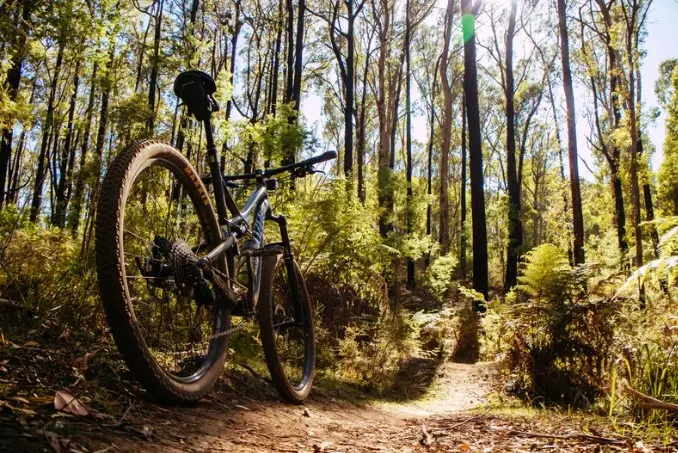
Hoenderloo works well as a base for cyclists. Road, gravel or singletrack — the Veluwe has plenty of room. Here are six routes we like, with a start point and what to expect.
1. De Hoge Veluwe classic (50 km, road, moderate)
Start: Hoenderloo entrance (about 2 km from the house).
The classic loop through the national park, past the Kröller-Müller Museum and back. Smooth asphalt, gently rolling.
2. Deelerwoud MTB trail (35 km, gravel / singletrack, technical)
Start: wildlife screen Ringakker (about 10 minutes by bike).
For riders who like a technical day. Narrow trails, roots, and the odd short climb.
3. Radio Kootwijk gravel (45 km, gravel, tough)
Start: Hoenderloo (straight from the house).
Sand tracks and heath, finishing at the old Radio Kootwijk building. Heavy in dry sand — worth it if you like a workout.
4. Apeldoorn–Hoenderloo road loop (70 km, road, sporty)
Start: Hoenderloo (straight from the house).
A longer road loop via Apeldoorn and Berg en Bos. Good rhythm, usually quiet traffic on the lanes we pick.
5. Easy family loop Spelderholt (20 km, easy)
Start: park De Rimboe (straight from the house).
A flat, easy forest ride for families or a recovery spin. Nothing special technically — just trees and fresh air.
6. Zandenwoud MTB trail (51 km, MTB, singletrack, technical)
Start: Varenna on the Woeste Hoefweg (right by holiday park De Woeste Hoogte / De Rimboe).
The Zandenwoud network by Staatsbosbeheer suits riders who like a technical day. Narrow trails, tight corners and the odd climb where you need to work. Three signed loops — A (22 km), B (23 km), C (14 km) — ride them separately or in one go (51 km). Not your very first MTB outing; with a bit of skill it's one of the best trails around here.
Look for the black MTB symbol on posts; direction is anti-clockwise. At some junctions a GPX helps: Staatsbosbeheer route brochure (PDF) and MTBroutes.nl Apeldoorn for tracks.
Younger children: Hoenderloo has a 4 km MTB kids route with orange fox markers.
MTB tips for the Veluwe
- Many MTB trails here are sand and rough surface: roots, short climbs and corners that feel quicker than on a map. Dry sand can drag.
- Knobbly tyres, a spare tube or patch kit, water and a helmet save a lot of hassle halfway round.
- Spring and autumn are usually kindest to the ground; after a long dry spell in summer things get dusty and the sand loosens.
- Stay on signed trails. No cutting through scrub or heath — it disturbs the habitat.